Image / HBO
A Knight of the Seven Kingdoms has almost reached the end of its first season with episode 5 – and just in time for the finale, the series’s first major battle is about to take place.
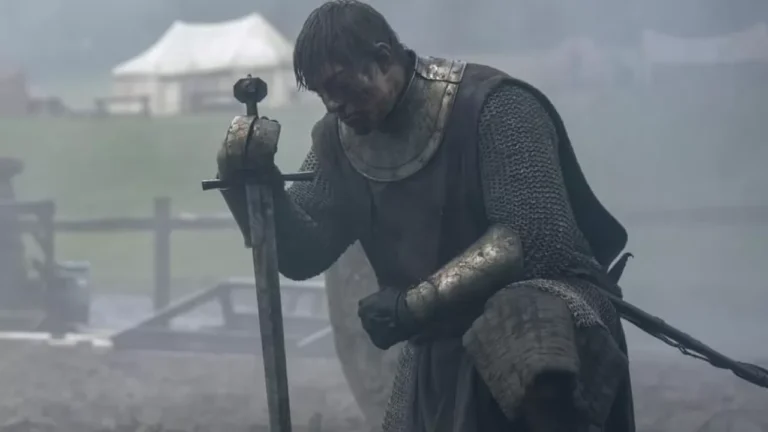
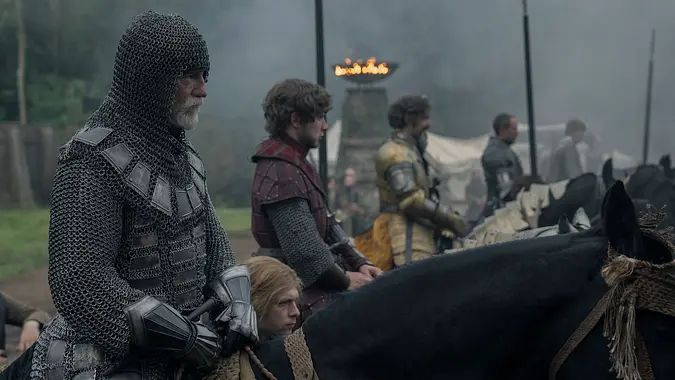
The focus of this episode: The Trial Seven, an ancient trial by ordeal that decides the fate of Ser Duncan the Tall after he defends a simple stage performer against the brutal Prince Aerion Targaryen.
At Dunk’s side are Ser Lyonel “Laughing Storm” Baratheon, Raymun Fossoway, Ser Humfrey Beesbury, Ser Humfrey Hardyng, and finally Prince Baelor “Brechspeer” Targaryen.
Opposing them are Aerion, his brother Daeron, their father Maekar, Ser Steffon Fossoway, and three knights of the Kingsguard—Ser Donnel of Duskendale, Ser Roland Crakehall, and Ser Willem Wylde. It is only the second time in the history of Westeros that The Trial of Seven has been carried out—and it ends in shock.
Chaos in the mud
Behind the scenes, the verdict of the Seven itself was a kind of battle: dirty armor, drying mud, fog machines, and wasps everywhere. Aerion actor Finn Bennett recalls in an interview with Entertainment Weekly that rotten fruit baskets and sugary fake blood apparently attracted “every wasp in Belfast.”
Showrunner Ira Parker reports that the insects even had to be removed in post-production because someone was constantly swatting at them. To keep the complex sequence from descending into chaos, the team had a large whiteboard with maps on which the entire The Trial of Seven was structured blow by blow.
Why does Dunk miss the fight at first?
Although the episode advertises the big battle, Dunk isn’t really there at the beginning of the fight. He rides bravely into the fray, but is knocked off his horse early on and hit in the head – the hero is unconscious for the time being.
Parker and director Owen Harris deliberately chose to open the fight with a flashback to Dunk’s childhood in Fleahole and the death of his girlfriend Rafe. This slows down the pace, but is intended to reinforce Dunk’s background and the emotional impact of the later ending of episode 5 – even though Parker himself admits that this trick is likely to “displease some people.”
Baelor as the new Ned Stark?
In the context of the series, Prince Baelor Targaryen has repeatedly been compared to Ned Stark. Actor Bertie Carvel finds the parallel fitting: both characters believe in justice and honor—and both die because they want to do the right thing.
Parker is more cautious: in his view, Ned was more naive than Baelor. Baelor knows exactly how dangerous his intervention is – since the Battle of Redgrass Field, in which he and Maekar triumphed as “hammer and anvil,” he has been considered a war hero. Now he must live up to his legend: he voluntarily sides with Dunk, opposes his own brother, and risks his crown and his life.
Carvel says the scripts showed him how much he longed for a real hero’s story. Before The Trial Seven, Baelor asks Dunk several times if he is a good knight – at the decisive moment, he must ask himself the same question.
The moment the helmet falls
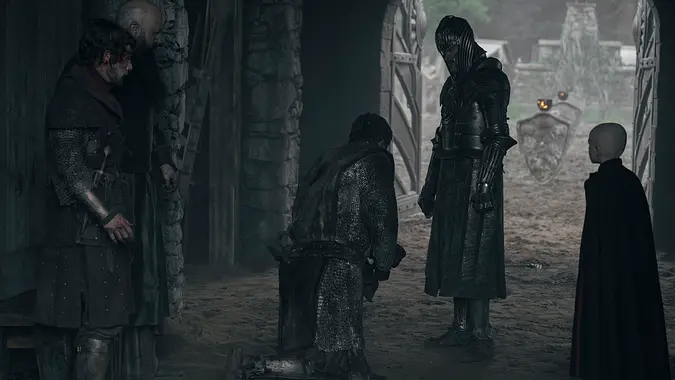
After the verdict, it initially appears as though Dunk and his comrades have survived the battle. Baelor stands, speaks to Dunk—everything seems like a hard-fought but favorable outcome.
Then Baelor takes off his helmet. Only now does it become clear what has really happened: the back of his skull is crushed, and he collapses shortly afterwards and dies. The injury was inflicted by his brother Maekar, who struck him in the melee. Actor Sam Spruell explains that they played with different nuances of guilt – from tragic accident to the question of whether Maekar’s deep desire for the crown might have played a subconscious role.
Parker describes the death as particularly cruel. At this moment, Baelor’s life is basically only being “held together” by his helmet – “he is already a dead man, he just doesn’t know it yet.” Only when the helmet is removed do the characters – and the audience – realize that he never had a real chance of survival.
Why Baelor’s death makes Dunk’s path more difficult
In an interview, Parker explains that Baelor’s death is tragic not only for Westeros, but also for Dunk personally. Baelor was one of the few Targaryens who truly admired Dunk; as king, he would have made Dunk’s future much easier.
Parker calls this a recurring pattern in Dunk’s life: success seems within reach before fate brutally intervenes and steers everything in a different direction. Baelor’s death exemplifies this pattern and makes it clear how dearly every small chance of advancement is paid for by someone like Dunk.
What Baelor’s sacrifice means for Westeros
Parker emphasizes that Baelor’s decision to participate in The Trial of Seven shows what kind of people a world like Westeros really needs.
The showrunner refers to the book by the brothers from “Game of Thrones” that King Joffrey studies. There, Ser Duncan the Great later fills four pages—a hint that Baelor’s sacrifice is what makes Dunk’s future importance to the realm possible in the first place.
Baelor’s death also changes the line of succession: the heir apparent is dead, and Maekar Targaryen becomes the next contender for the Iron Throne. Sam Spruell describes Maekar’s grief as inextricably linked to the realization that his “deep desire to be number one” could become a reality with his brother’s death.
About the Author